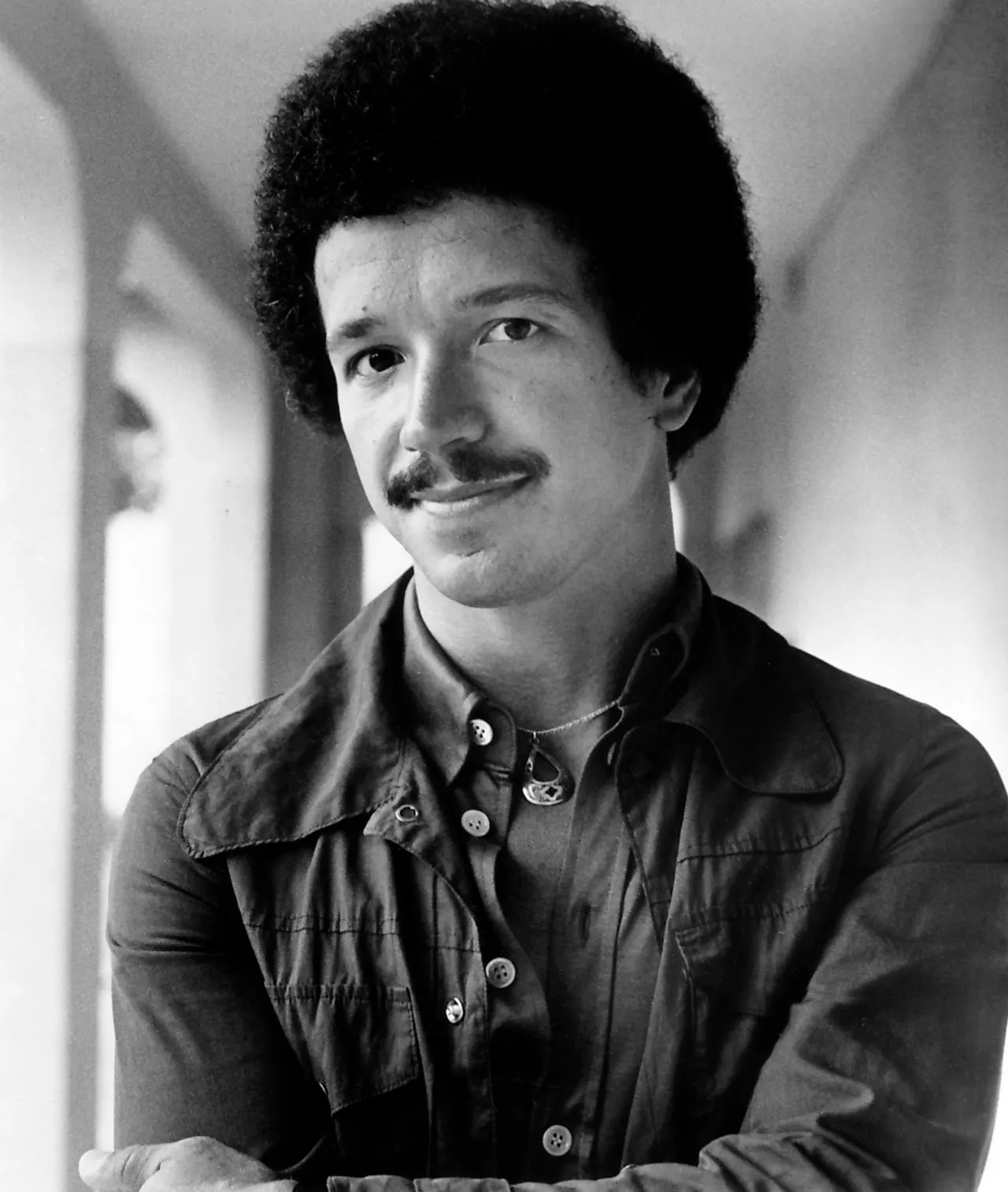
May 8, 1945 (Allentown, Pennsylvania)
On 24 January 1975, in the opera house in Cologne, Keith Jarrett sat down in front of thirteen hundred people at half past eleven at night and played for about sixty-six minutes without a plan.
Not improvising on tunes. Improvising the tunes. No head, no changes, no agreed key, nothing written and nothing rehearsed. The recording of it is the best-selling solo album in jazz history and the best-selling piano album of any kind, at something like four million copies, and in 2025 the Library of Congress put it in the National Recording Registry.
Almost everything about the night had gone wrong first, and it is worth telling properly, because the tidy version has become a motivational poster and the real one is more useful.
What actually happened in Cologne
The concert was organised by Vera Brandes, a German student and part-time promoter. Most accounts give her age that night as seventeen; a recent film about her says eighteen. Either way, she had booked a sold-out opera house for a performer she had talked her way into presenting, and the only slot available was 11:30pm, because the house was staging an opera earlier in the evening.
Jarrett had asked for a Bösendorfer 290 Imperial, a ten-foot concert grand. Through a mix-up the staff found a different Bösendorfer backstage, a much smaller baby grand kept for rehearsals, assumed it was the one requested, and put it on the stage. By the time anyone noticed, there was no time to get the right instrument in.
The piano they had was out of tune, thin and tinny in the upper register, weak in the bass, with pedals that did not work properly. It took hours of work to make it playable at all. Jarrett had driven a long way, was in serious back pain, and was wearing a brace. He said he would not play. Brandes talked him into staying. Dinner beforehand went wrong too: the restaurant took so long that the food arrived as they had to leave.
His own summary, later: “We had the wrong piano. I had not slept for two days. Everything was wrong.”
The reason there is a recording at all is almost an accident. The ECM engineers were already set up, and the plan had been to send them home. According to the accounts of the night, Jarrett went ahead partly because the recording rig was there anyway and he would at least end up with a document of it.
Why the bad piano matters, and what the poster version gets wrong
The story is usually told as triumph over adversity, which is comfortable and slightly beside the point. Jarrett’s own account of the mechanism is more interesting and more transferable:
You always want to make it as good as it can be, but when you have problems that you can’t do anything about, one after another, you start forgetting actually what you’re doing, and that’s one of the secrets.
Note what he actually says: that the problems made him forget what he was doing, and that this was one of the secrets. That is his account of the mechanism and it is worth more than the poster.
Here is an inference of our own, offered as one and not as fact. A piano that is weak in the bass and thin at the top gives a player less to work with at both ends of the keyboard, and the record does sit heavily in the middle, on repeated left-hand figures. It is at least plausible that the famous ostinatos are partly shaped by the specific instrument rather than achieved in spite of it. We have found no statement from Jarrett saying so, so treat it as a listening hypothesis.
Before Cologne
Keith Jarrett was born in Allentown, Pennsylvania on 8 May 1945, into a family with a Slovenian grandmother whose part in raising him he has spoken about. He was a serious classical child pianist and gave a full recital very young.
He came up fast through other people’s bands: Art Blakey’s Jazz Messengers in the mid-1960s, then the Charles Lloyd Quartet, which was one of the few jazz groups of the period with an actual rock audience. His own leader debut, Life Between the Exit Signs, came in 1967, in a trio with Charlie Haden and Paul Motian.
Then Miles Davis, in 1970 and 1971, in the electric band. Jarrett has never hidden his dislike of electric keyboards, and playing them for Davis is one of the odder episodes in his discography. He signed to ECM for Facing You in 1972, a studio solo piano record that set up everything that followed.
Two working groups ran alongside the solo concerts through the 1970s, and the distinction is worth knowing. The American Quartet was Dewey Redman, Charlie Haden and Paul Motian, and it grew out of the earlier Haden-Motian trio: loose, folk-inflected, in the Ornette Coleman lineage, and capable of going free at any moment. The Survivors’ Suite and Eyes of the Heart are the records, both recorded in 1976. The European Quartet was Jan Garbarek, Palle Danielsson and Jon Christensen, starting with Belonging in 1974, and it is cooler, more composed and more open in sound: the record most people mean when they say the ECM aesthetic.
The other half of the catalogue
Two things get left out of most accounts and both change the picture.
The first is the classical playing, and it is not a hobby. He has recorded Bach, including a concert performance of the first book of The Well-Tempered Clavier, along with Shostakovich, Mozart and Handel, and he recorded a solo album of pieces by the metaphysical philosopher Gurdjieff. Very few musicians work at the top level in both idioms, and it is directly relevant to the jazz: the touch, the voice-leading discipline and the willingness to let a line simply be a line all come from that side of the training.
The second is Manfred Eicher and ECM. The label signed him in 1972 and has released the overwhelming majority of his work since, and the relationship produced something more like a shared aesthetic than a contract — a particular acoustic, a particular amount of air around the piano, a willingness to release a seventy-minute improvisation with no editing. The sound people mean when they say ECM is partly Jarrett’s playing and partly Eicher’s decisions about what a record should be.
The Standards Trio
In 1983 Manfred Eicher suggested a trio record. Jarrett brought Gary Peacock and Jack DeJohnette, whom he had played with on Peacock’s Tales of Another in 1977, and proposed something that was, in 1983, faintly perverse: play standards.
The context matters. The early-eighties jazz mainstream was full of new compositions and original material. Going into a studio to play “All the Things You Are” looked like a retreat. Jarrett’s explanation is blunt: “This material was so damn good, and why was everyone ignoring it and playing clever stuff that sounds all the same?” And, later: “a valuable player doesn’t have to play anything new to have value, because it’s not about the material, it’s about the playing.”
The January 1983 sessions produced three albums — Standards, Vol. 1, Standards, Vol. 2 and Changes, the last a set of free improvisation — and the group then stayed together for about three decades, mostly working live and mostly without arrangements. That last point is the interesting one. They did not decide in advance how a tune would go. Each performance starts, develops and ends however it does, which is why there are so many recordings of the same songs and why none of them is redundant.
The scale of the solo project
It is easy to treat the improvised solo concert as a stunt he pulled off a few times. The discography says otherwise. Solo Concerts: Bremen & Lausanne, Staircase, the ten-album Sun Bear Concerts from a single Japanese tour, Concerts, Paris Concert, Dark Intervals, Vienna Concert, La Scala, Carnegie Hall Concert, Rio, and more still emerging from the archive.
That is not a trick repeated. That is a practice sustained for four decades, in public, with no safety net and no second take, and the failure rate is necessarily part of it. Anyone can improvise for an hour once. Doing it as a touring occupation means walking on stage some nights with nothing and finding something anyway.
What is actually happening in the hands
The hardest thing he does is not technical, and it is not the fast playing. It is starting from silence with no material and building something with shape. Most improvisers, faced with nothing, either play a lick or play a mood. Jarrett plays a cell — a small rhythmic or intervallic idea — and then treats it as though it were a composition he has been handed, developing, transposing, inverting and eventually abandoning it for the next one. A Jarrett solo concert in sections is a sequence of those, each played until it is genuinely finished.
The vamp is the engine. Long stretches of the solo concerts sit on a repeating left-hand figure over a static or slowly-shifting harmony, often gospel- or folk-shaped, often diatonic, often for minutes at a time. This is why the music is so accessible to people who do not otherwise like jazz: it has the harmonic behaviour of folk music with the elaboration of a concert pianist on top.
The touch is doing more work than the notes. This is the part that does not survive transcription. Jarrett’s dynamic range within a single phrase is unusually wide, and he voices chords so that one note in the middle carries the weight rather than the top note. Play a Jarrett transcription accurately and it will sound nothing like him, which is a good diagnostic: if the notes alone carried the music, everyone could do it.
And he is audibly, sometimes distractingly, present. He sings and groans while he plays, and rises out of the seat. It is on the records and some listeners cannot get past it. We are not going to explain what it means, because we do not know, and the confident explanations you will read elsewhere are guesses about what is happening inside another person’s head.
Three things worth stealing, in ascending order of difficulty:
- Set a timer for three minutes and improvise with no tune and no changes. Nothing else. Most people last forty seconds before reaching for something they know. That gap between forty seconds and three minutes is the whole discipline.
- Take one four-note cell and develop it for a full minute without adding new material. Transpose it, displace it rhythmically, harmonise it differently, invert it. This is composition technique applied in real time, and it is what stops free playing from becoming wandering.
- Build a vamp and stay on it past the point of comfort. Two chords, or one. Then find out what you have left when the harmony stops helping.
The illnesses, stated plainly
Two things interrupted this career and both deserve to be described without decoration.
In 1996, while touring in Europe with the trio, Jarrett became ill with what was diagnosed as chronic fatigue syndrome. He was largely unable to work for roughly three years. He later told Terry Gross that the illness forced him to have his piano action rebuilt with less resistance in the key press so that he could keep playing at all.
During that period, at home, he recorded The Melody at Night, With You — short, plain, unadorned readings of standards and folk songs, released in 1999. It is the least virtuosic record he has made and, for a lot of listeners, the one they return to.
In February 2018 he had a stroke. In May 2018 he had a second, after which he was paralysed and spent close to two years in a rehabilitation facility. He has regained a limited ability to walk with a cane, and he can play with his right hand. He remains partly paralysed on his left side and is not expected to perform again.
He described his own position to the New York Times in October 2020:
I don’t know what my future is supposed to be. I don’t feel right now like I’m a pianist.
That is where it stands, in his words. It is not our place to put a redemptive frame around it, and we are not going to. Archival concerts have continued to appear from the ECM vaults, including recordings from his 2016 European tour.
He spoke again in 2022, to the same journalist, about where things stood. He described being at the piano, playing with his right hand. He also said this:
My right hand is not like my right hand was, and my left hand is not at all.
And when the interviewer suggested he was building strength back, he answered that he did not know if he believed that.
Both halves of that belong here. Reporting only the playing would be a recovery story he has not told; reporting only the discouragement would be a decline story he has not told either. He is at the piano, and he is clear-eyed about what has gone. We are going to leave his account where he put it.
Why the Standards Trio was the harder idea
It is worth spelling out why playing standards in 1983 was a stranger decision than improvising from nothing in 1975.
A free solo concert has no wrong notes in it, because there is nothing to be wrong against. Play “Autumn Leaves” in front of an audience and every single person who knows the tune is holding a reference recording in their head. The scrutiny is total. Doing that for thirty years, live, without arrangements, and finding something new in the same twenty songs, is a harder and less glamorous kind of nerve than the one he is famous for.
It also quietly reversed a fashion. By the mid-eighties, playing standards was respectable again, and a good deal of what followed in mainstream jazz runs back through that decision.
What is documented and what is a story
Vera Brandes was seventeen, or possibly eighteen. Most contemporary accounts and the BBC’s own programme with her say seventeen; a 2025 dramatisation says eighteen. We say what the sources say and do not pick.
The piano was not, strictly, broken. It was the wrong instrument: a small rehearsal grand, badly out of tune, weak at both ends, with faulty pedals. That is worse in some ways and less dramatic in others, and it is what actually happened.
And the Köln Concert was not his first improvised solo concert. Solo Concerts: Bremen & Lausanne preceded it, and Facing You preceded that. Cologne is the famous one, not the first one — a distinction the poster version tends to lose.
Where to start, honestly
The Köln Concert, obviously, but listen to it once as music rather than as an event, and notice how much of it is a left-hand figure repeating. Then Standards, Vol. 1, for what he does with material he did not write. Then The Melody at Night, With You, which is the opposite of everything he is famous for and may be the one that stays with you.
Then set the timer for three minutes and play something that does not exist yet. You will find out very quickly how much of your playing is recall.
Start with these records
- The Köln Concert 1975
Best-selling solo jazz album ever. Completely improvised. Beautiful, emotional, and spontaneous. Essential listening for any pianist! - Standards, Vol. 1 1983
With Peacock and DeJohnette. Reimagines jazz standards with incredible sophistication. 'All the Things You Are' is mind-blowing. - Facing You 1972
Early solo piano album. Less famous than Köln but equally beautiful. Shows Keith's compositional and improvisational genius. - La Scala 1997
Another improvised solo concert, this time at the famous Milan opera house. More mature, reflective Keith. Stunning.
How to listen
- If you are starting out
- Start with Part I of 'The Köln Concert' - let it wash over you. Do not analyze, just feel it.
- If you can already comp through a standard
- 'Standards, Vol. 1' - study how Keith deconstructs familiar songs. Notice his voicings and rhythmic displacement.
- If you are transcribing
- Listen to multiple versions of 'All the Things You Are' from different Standards Trio recordings. Notice how he never plays it the same way!
Sources
Every year cited, every album title set in italics and every quotation on this page matches the app's own record or a claim in the site's fact file that cites at least two sources on different websites. Where sources disagree, the page says so instead of picking the better story.
- When the Wrong Piano Met the Right MusicianBeth Collier
- Why Play Standards?DownBeat
- Keith JarrettECM Records
- Jarrett: Standards TrioJazz Shelf
- Keith Jarrett, Jack DeJohnette and Gary Peacock: Standard BearersJazzTimes
- Köln 75 tells the true story of the 18-year-old girl behind one of jazz's greatest momentsKino Film Collection
- Keith JarrettMEpedia
- Keith Jarrett's eternal balancing act: how he plays the piano nowNPR / WBGO (Nate Chinen)
- Keith Jarrett artist biographySpotify
- The Köln Concert: How Keith Jarrett Made A MasterpieceuDiscover Music
- As Keith Jarrett Closes a Chapter, Jazz United Reflects on His Solo Piano CareerWBGO
- Keith JarrettWikipedia
- The Köln ConcertWikipedia
- Standards, Vol. 1Wikipedia